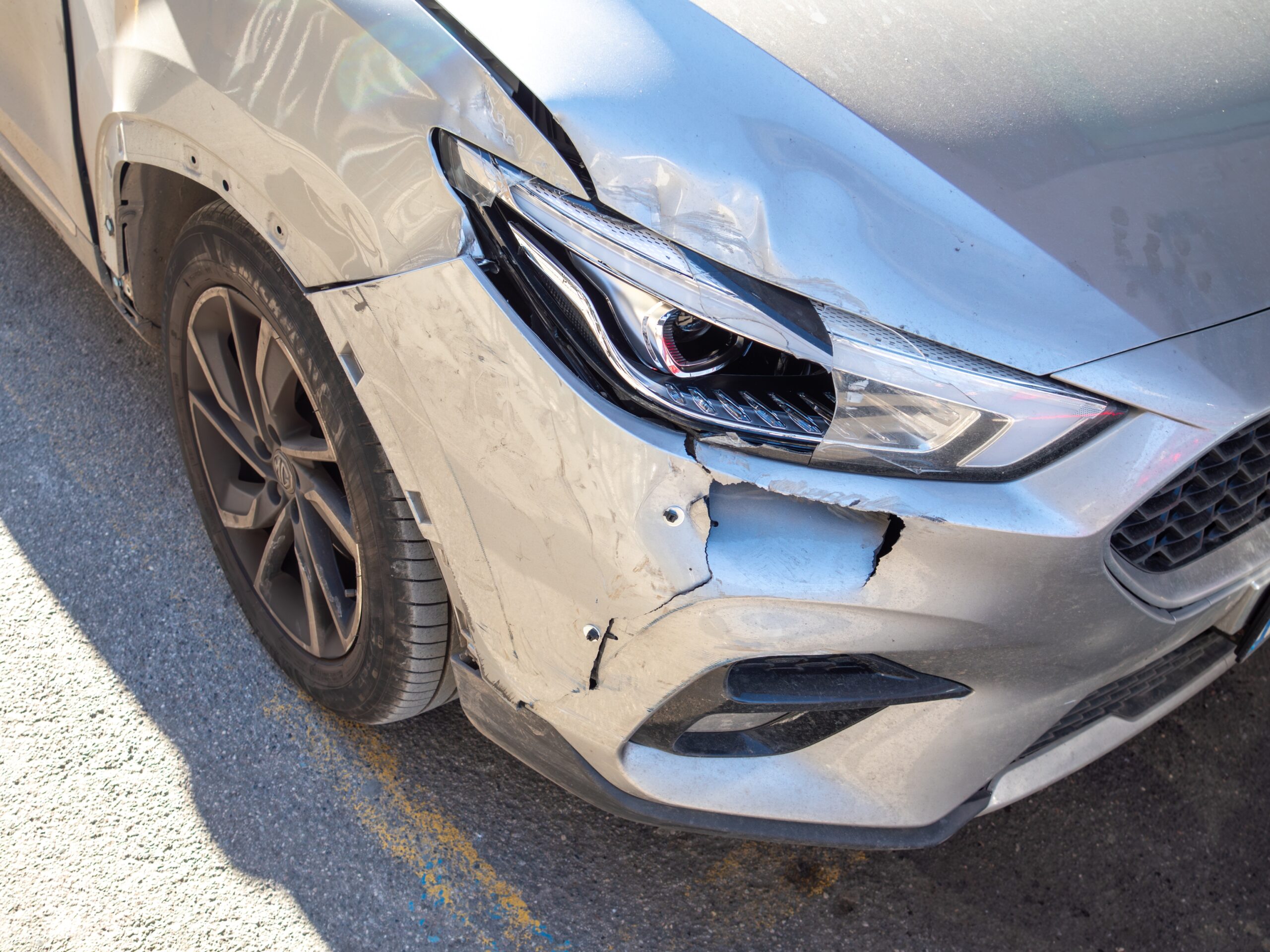

The car looks fine. The panels line up, the paint matches, the boot lid closes like new. But on the drive home from the repairer, the steering wheel sits slightly to the left. On the Western Ring Road, there's a pull you didn't have before. At 90 km/h, a new vibration comes through the wheel that wasn't there the day of the accident.
This is where a lot of post-accident repairs fall short. The body's been put back together, but something underneath the skin wasn't. A collision transfers force through a vehicle in ways that aren't always visible from the outside, and a panel-only shop fixes what they can see. Suspension geometry, driveline, cooling systems, electrics, ADAS sensors, all of that sits in a different trade. Some panel beaters coordinate with a mechanical partner. Others just hand the keys back.
This article covers the hidden car damage after an accident that panel-only shops aren't always set up to catch. What can go wrong under the skin. How to tell. And what to push for when the visible repair is done but the car doesn't feel right.
Why hidden damage after an accident matters
A collision is a sudden transfer of energy. That energy goes somewhere. Some of it crumples the bodywork, which is exactly what it's designed to do. The rest ripples through the chassis, the suspension, the driveline, and dozens of sensors and mounts bolted to all of those things.
A panel repairer's job card lists the panels to replace, the parts to paint, the trim to refit. It doesn't usually list “check front suspension geometry” or “recalibrate the forward-facing camera.” If those checks need to happen, they need to be added, either by the panel shop coordinating with a mechanical workshop, or by the same shop handling both sides of the work.
If they're not added, the car gets handed back looking perfect and driving wrong.
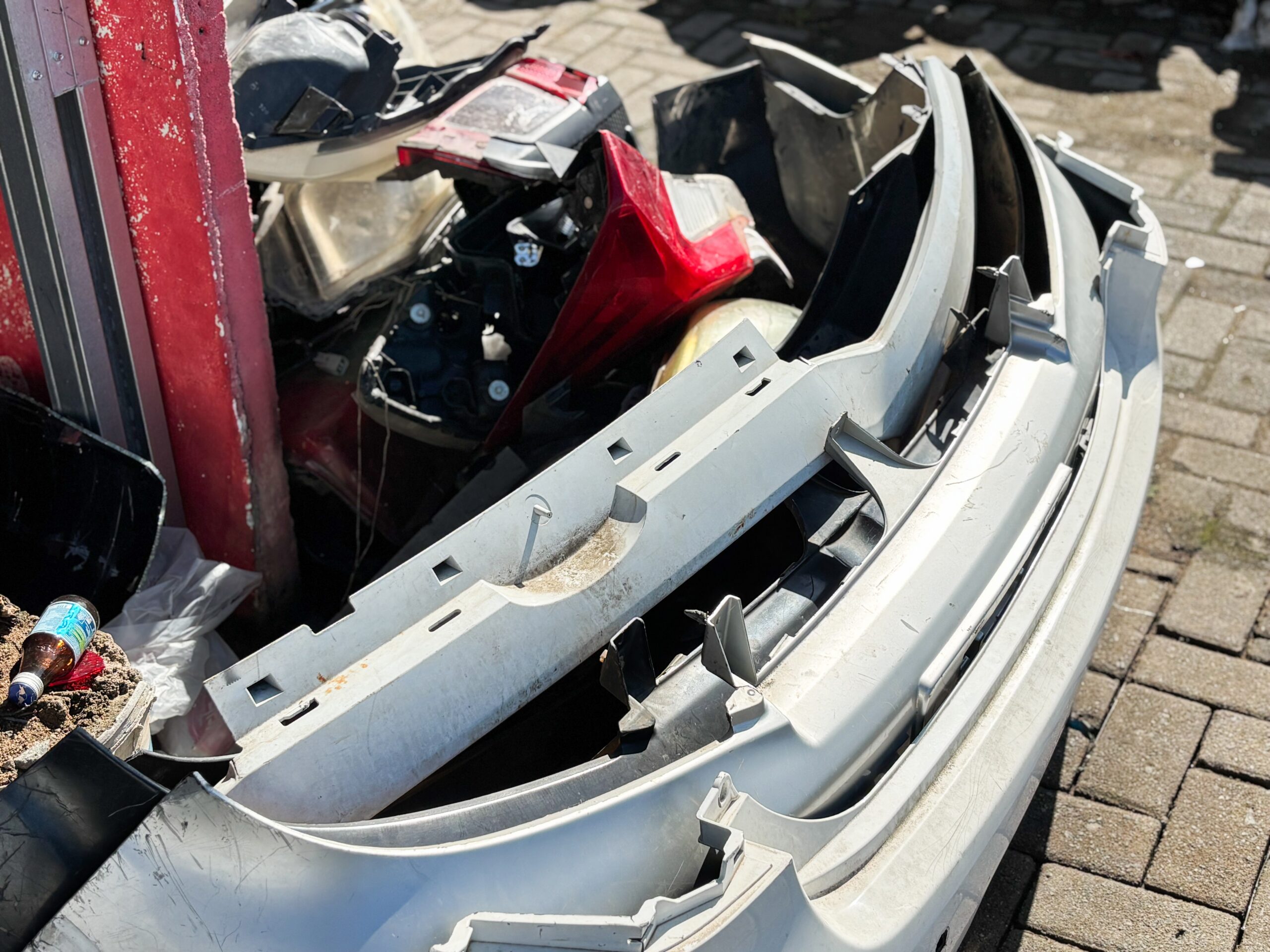
What can go wrong under the skin
Where the damage shows up depends on which way the car was hit.
Front-end impacts
The obvious stuff is the radiator, condenser, cooling fans, and the panels wrapped around them. Less obvious: the AC compressor and lines can crack and leak slowly, front crash sensors can be disturbed or damaged, airbag modules may flag fault codes that only appear on a scan, and the front subframe (the structural frame the engine and suspension mount to) can shift a few millimetres out of square. That's enough to throw every alignment angle on the car.
Power steering lines, steering rack mounts, and the electric power steering motor on newer cars all sit in the front crash zone too.
Rear impacts
Rear suspension geometry is the big one. Even a low-speed shunt can push a rear trailing arm or control arm far enough to pull the alignment. On cars with rear-mounted fuel tanks, the tank straps and fuel lines need inspecting. Exhaust hangers and heat shields get cracked or bent out of position, and they can rattle or burn out later.
Reversing cameras, parking sensors, and boot drainage channels are often disturbed. The drainage point matters. If the boot seal no longer sits flush, water finds its way in and you end up with a damp spare wheel well six months later.
Side impacts
Door alignment affects window regulators, which is why windows that used to close smoothly might now bind or slow down. Side curtain airbag sensors live in the B-pillar and door frame. On all-wheel-drive cars, a hard side impact can disturb driveshaft angles and cause vibrations you'll feel at highway speed.
Underbody damage
This one gets missed most often because it's the least visible. If the car was kerbed or scraped during the accident, the sump, transmission pan, fuel lines, and exhaust can all take a hit. 4x4s and utes with bash plates fitted usually come off better, but bash plates can deflect force into mounting points rather than absorbing it.
A quick triage guide
If you've had the panel work done and something doesn't feel right, this is a rough guide to what's usually behind it and what kind of inspection sorts it out.
| Symptom | Likely cause | What to check |
|---|---|---|
| Pull to one side on a straight road | Wheel alignment or suspension geometry shifted | Four-wheel alignment plus suspension inspection |
| Steering wheel off-centre | Alignment out | Four-wheel alignment |
| New vibration at 80–100 km/h | Wheel balance, bent rim, or driveshaft | Road test, wheel balance, driveshaft check |
| Aircon stopped working | Condenser, compressor, or AC line damage | AC pressure test and leak check |
| Warning lights after the repair | Airbag, ABS, or ADAS fault codes | Full diagnostic scan |
| False lane departure or cruise dropping out | ADAS miscalibration | ADAS calibration |
| Water in the boot weeks later | Seal or drainage damage from rear impact | Boot seal and drainage check |
| Grinding or rattle from underneath | Exhaust, heat shield, or bash plate damage | Underbody inspection on a hoist |
Use this as a starting point when you talk to your repairer or insurer. Multiple symptoms often point to the same cause.
Car alignment after an accident
Wheel alignment is the most common post-accident mechanical issue, and the one owners notice first. Even a low-speed impact, or a hard kerb strike during the accident, can push alignment angles outside factory spec. You'll usually feel it first as a pull on the freeway or a steering wheel that no longer sits straight.
A four-wheel alignment in Melbourne sits roughly between $100 and $200 for a standard passenger car. Performance cars, 4WDs, and some European models run higher, typically $150 to $250.
A wheel alignment on its own isn't always enough, though. If a suspension component has been bent, a mount has shifted, or a subframe has moved, the alignment machine will only adjust what's adjustable. The alignment will read as done, but the car will still track off. The correct sequence after a collision is:
- Inspect the suspension and subframe for damage or shift
- Replace or realign any component that's out of position
- Then run the four-wheel alignment
Skipping the first two steps is a common corner-cut. The car passes the alignment readout, but the underlying geometry problem is still there.
ADAS calibration: the step panel-only shops often skip
Most cars built from 2018 onwards have some form of advanced driver assistance system. Lane-keeping, automatic emergency braking (AEB), adaptive cruise, blind spot monitoring, 360-degree cameras. AEB became mandatory on every new car model sold in Australia from March 2025, so these systems are now standard rather than premium.
The sensors and cameras behind these features are aimed to within fractions of a degree. If the panel they're mounted to has been replaced, repainted, or even had its bracket disturbed, they need to be recalibrated. The car won't always warn you that calibration is needed. It'll just operate on bad data.
Typical signs something wasn't recalibrated:
- Lane departure warnings going off when you're clearly in your lane
- Adaptive cruise dropping out or braking for nothing
- Parking sensors beeping at empty spaces
- 360 camera stitching the view wrong
Calibration is done either statically (in a workshop, with manufacturer-approved targets set at precise distances in front of the car) or dynamically (by driving the car on clearly marked roads while the system relearns). Some cars need both.
Cost for ADAS calibration in Australia is typically $350 to $500 per vehicle, though complex systems on late-model European cars can run higher. A panel-only shop without the rig or the training either skips the step, sends the car out to a specialist (which adds time to the repair), or doesn't know the calibration was needed in the first place.
What you can do before you accept the car back
Before you sign off and hand the keys back to the insurer, run through these checks yourself. None of them need tools.
Drive it at freeway speed. Take it up the Western Ring Road or the Princes Freeway at 90 to 100 km/h. Note any pull, any vibration, any off-centre steering. Short suburban drives won't show up geometry problems that only appear at speed.
Run the aircon on a hot day. Front-end damage often takes out the AC condenser or cracks a line. If the air blows warm, or takes much longer than usual to cool, something wasn't fixed.
Test every electric function on the side that was hit. Windows, locks, mirrors, indicators, wipers, central locking. A side impact can pinch a wiring loom in ways that don't show up for weeks.
Look under the car on a clean driveway. Fresh oil drips, coolant puddles, or scrapes on panels that weren't part of the visible damage all point to underbody issues the repair didn't cover.
Check all warning lights on a cold start. Some fault codes only throw warning lights on the first start of the day. Let the car sit overnight, then start it and watch the dash before you drive off.
Try the ADAS features deliberately. If the car has lane-keeping, turn it on and drive a straight stretch. If it has adaptive cruise, use it in light traffic. Notice anything that behaves differently to before the accident.
If any of these raise a flag, don't sign off. Raise it with the repairer and the insurer before you accept the car.
Asking for a mechanical inspection on top of the panel repair
You can request a mechanical inspection as part of your claim, and most insurers will cover it if the damage is causally linked to the accident, which most mechanical damage after a collision is. Your Product Disclosure Statement (PDS) spells out what's covered and how to request it. The section on supplementary repairs is the one to read before you make the call.
The process usually works like this:
- The panel shop completes the visible repair
- If they identify or suspect mechanical damage during the repair, they lodge a supplementary claim with the insurer
- The insurer approves the additional inspection or repair work
- The work is carried out either by the panel shop (if they do mechanical work too) or by a mechanical partner
Supplementary claims are routine. Insurers expect them on collision repairs, and a good panel shop will flag potential mechanical issues during the initial assessment rather than after you've already picked the car up.
Why we do both under one roof
Street Elite is one of the few shops in Truganina and the western suburbs that handles both panel and mechanical work on the same site. When a car comes in after a collision, the panel repair and the mechanical check happen on the same job card. The suspension inspection runs before the alignment. The ADAS calibration gets coordinated with the panel work, not tacked on a week later at another workshop. The car gets road-tested on the Western Ring Road before it goes back to you, and if anything doesn't feel right, we find it before you do.
That's not a selling point in itself. It just means the car that leaves is the car that came in, minus the damage.
If the panel work is done and something still doesn't feel right on the drive home, don't accept it. Book an inspection. For drivers in Truganina, Tarneit, Point Cook, and across the western suburbs, we can check both sides of the job, panel beater and mechanic, in one visit.