

A car park dent can look small at first. Then the light catches a cracked clear coat, a sharp crease near the door edge, or a scrape where the bumper has lost colour.
That is when the question changes. It is no longer only about pushing a dent back into shape. It is about whether the paint surface has been damaged enough to need spray painting as part of the repair.
A dent may need paint when the paint or clear coat is cracked, chipped, scraped, stretched, exposed to metal, damaged on a panel edge, affected by old repairs, or likely to corrode. If the paint is intact and the dent is shallow, the repair path may be different. Street Elite Bodyworks in Truganina can inspect the panel before confirming whether the job is panel repair only, car spray painting, blending, or a wider smash repair.
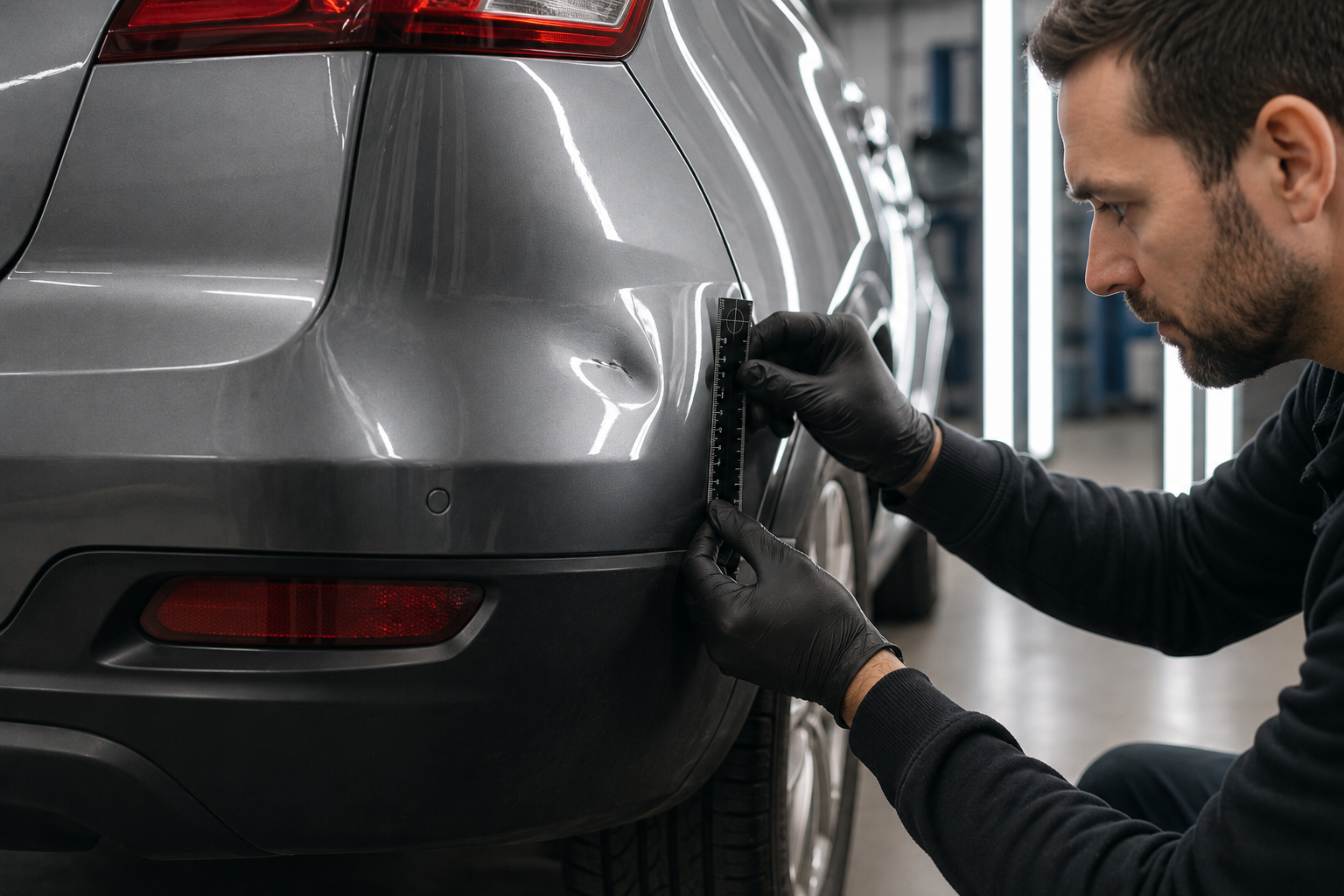
When does a dent need paint?
A dent needs paint when the impact has damaged the paint system, not just the panel shape. The paint surface is part of the repair decision because it protects the panel and affects how the finished job will look.
Common signs include:
- The paint has cracked. A cracked paint film usually means the surface has split under stress. Once that happens, panel repair alone may leave visible damage behind.
- The clear coat has been scraped or stretched. The clear coat is the top protective layer. If it has been cut, scraped or distorted, the finish may not polish out cleanly.
- Bare metal is exposed. Exposed metal should be treated sooner because moisture can start corrosion.
- The dent sits on a panel edge or body line. Edges and body lines are harder to reshape cleanly, and paint damage often shows more clearly there.
- There is a sharp crease. A soft shallow dent is one thing. A hard crease can stretch the metal and crack the finish.
- There is previous filler or old repair work. Old repairs can change how the panel behaves when it is repaired again.
- The damage includes paint loss on a bumper, door, quarter panel or work vehicle panel. Once the surface coating is missing, the repair usually needs more than reshaping.
The size of the dent does not tell the whole story. A large shallow dent with intact paint may be simpler than a small crease that has cracked the finish.
When might panel repair be enough?
Panel repair may be enough when the dent is shallow, the paint surface is intact, and the panel has not been sharply stretched. The workshop still needs to inspect the damage before confirming the repair path.
A dent is more likely to stay in the panel-repair category when:
- the paint has not cracked
- there is no scrape through the clear coat
- the dent is not on a tight edge or body line
- the panel has not been previously repaired in that spot
- the surrounding gaps and trims still line up
- there is no rust, exposed metal or water entry point
This does not mean every shallow dent can be repaired without paint. Lighting, angle, panel access and paint condition all matter. A dent that looks simple in a phone photo can still show a crease, ripple or paint stress once the vehicle is under workshop lighting.
How does the workshop decide between repair and paint?
The repair decision depends on the damaged area, the paint condition, the panel shape and what sits behind the panel. A workshop is not only looking at the visible dent. It also checks whether the panel can be reshaped and refinished properly.
| Damage type | Likely concern | What the workshop needs to check |
|---|---|---|
| Small door ding with intact paint | The dent may be shallow, but access and panel tension still matter. | Paint condition, dent depth, panel access and whether the metal has stretched. |
| Bumper scuff with paint loss | Plastic may be gouged, torn or distorted. | Depth of scuff, broken tabs, bumper shape, primer exposure and whether blending is needed. |
| Quarter panel crease | A crease can distort a large panel area. | Metal stretch, body line shape, previous repair work and paint cracking. |
| Dent on a panel edge | Edges are harder to reshape cleanly. | Door gap, guard edge, panel alignment and paint damage along the fold. |
| Hail-style shallow dent | The paint may be intact, but there may be many small dents. | Number of dents, panel access, paint condition and whether any dents have cracked the surface. |
| Loading-bay scrape on a van or truck | Damage may affect presentation, decals or commercial paintwork. | Scrape depth, signage damage, panel distortion and whether fleet paint matching is needed. |
| Dent with rust or exposed metal | Corrosion risk becomes part of the repair. | Rust spread, bare metal, coating failure and whether the panel needs further preparation. |
A proper inspection also helps avoid the wrong repair. Painting over unstable old filler, cracked clear coat or hidden rust can leave a poor result later.
Why is paint matching not just a paint code?
A paint code is the starting point, not the full answer. The workshop still needs to account for age, sun exposure, previous repairs, metallic or pearl content, and how the colour changes under different light.
Two cars with the same factory paint code may not look identical years later. A car that has spent years outside can fade differently from the original formula. A panel that has already been repaired may also sit slightly different from the rest of the vehicle.
Blending may be needed when the new colour has to transition into a nearby area so the repair does not finish with a hard visual edge. This is more common on colours that shift with angle or light, including many metallic, pearl and white finishes.
The goal is not just to spray the correct colour. The goal is to make the repaired area sit naturally with the rest of the vehicle.
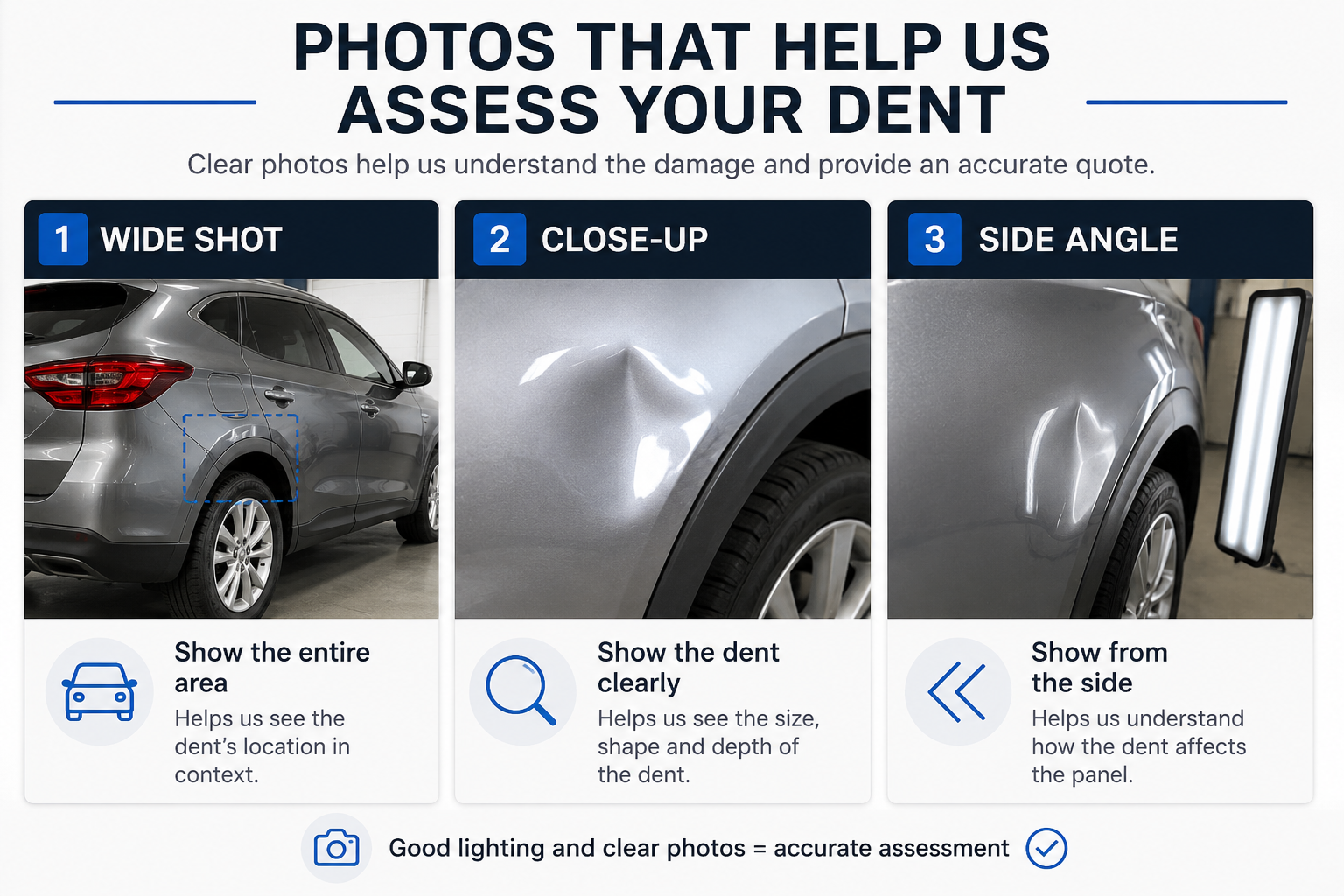
What photos help Street Elite assess a dent?
Photos help the first conversation, but they do not replace inspection. A clear photo set gives Street Elite a better view of where the dent sits, whether paintwork may be involved, and what information is needed before the next step.
Send these photos where possible:
- full vehicle shot from a few metres back
- wide shot showing where the dent is on the car
- close-up of the dent
- side angle showing depth, crease lines and panel shape
- photo of any cracked paint, scrape marks or exposed metal
- photo showing the panel edge, door gap, bumper corner or body line
- close-up of any damaged light, trim, badge or sensor area
- photo of the vehicle make, model and colour if not already clear
- registration number if the workshop asks for it
Daylight photos are usually more useful than dark indoor shots. Reflections can hide dents, so take a few angles rather than relying on one close-up.
A single close-up often makes the job harder to assess because it removes context. The workshop needs to know whether the dent is on a flat panel, a curved section, an edge, a bumper corner or near another repair area.
When should you get the dent checked sooner?
A dent should be checked sooner when the damage may keep getting worse or may affect more than appearance. That does not mean the car is unsafe, but it does mean the repair should not be left to guesswork.
Book an assessment sooner if you can see:
- exposed metal
- cracked paint or flaking clear coat
- rust starting around the dent
- a sharp edge that could cut skin or catch clothing
- a loose bumper, trim or moulding
- a damaged light, reflector or indicator
- a panel gap that has changed
- a door, boot or bonnet that does not open or shut cleanly
- water entering through a damaged edge or seal
- damage on a work vehicle where presentation matters
Fleet and commercial vehicles can need a faster decision even when the damage looks cosmetic. A dented and scraped van, ute or truck may still work, but the vehicle is also part of the business image. If signage, decals or fleet paint are involved, mention that early.
Getting the right repair path before paintwork starts
The best first step is to send a clear photo set and a short description of what happened. Include whether the damage is private, insurance-related, or part of a fleet repair.
A useful message sounds like this:
"Hi Street Elite, I have a dent on the left rear door with some cracked paint near the body line. The car is a 2021 Toyota Camry in white. It still drives normally and the door opens, but I am not sure whether it needs paint. I have attached wide, close-up and side-angle photos."
Street Elite Bodyworks can then review the photos, ask follow-up questions and advise whether the vehicle should be inspected in person before the repair path is confirmed.
The main thing is not to assume that a dent is simple because it is small. If the paint has cracked, scraped or exposed metal, the repair may need panel work and spray painting together.