

The truck is sitting in the yard with a bent panel, a scraped tray, a damaged door, a cracked light or branding torn across one side. Someone in the office needs a truck smash repair quote, but the repairer cannot give a useful first answer from one blurry close-up of a dent.
Good truck repair photos should show the whole vehicle, where the damage sits, close-up detail, side angles, doors or access panels open and shut, lights, number plate area, tray or box body, livery or decals, and anything that affects how the truck drives or works. Photos can help Street Elite Bodyworks in Truganina understand the likely repair path, but the final repair scope may still need an in-person inspection.
Photos are not about making the truck look worse or better than it is. They are about giving the repairer enough context to understand the first question: what needs to be looked at next?
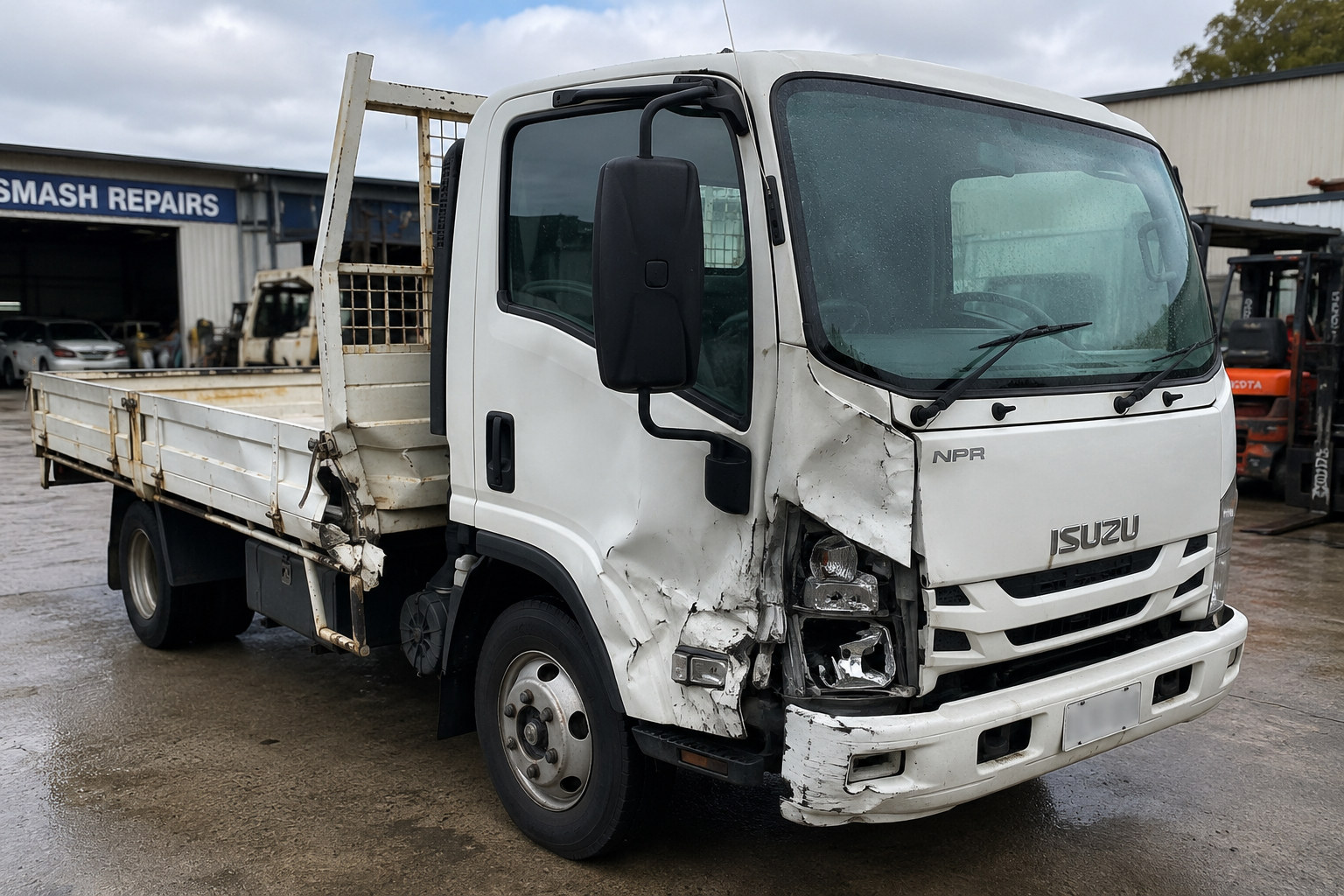
What photos help a truck smash repair quote?
A truck smash repair quote needs context before detail. A close-up of cracked paint or a dented guard helps, but only after the repairer can see where that damage sits on the vehicle.
- Full front view of the truck.
- Full rear view of the truck.
- Full left side and right side.
- A wide photo showing the damaged area in context.
- A close-up of the damaged panel, door, tray, guard, bumper or body section.
- Side-angle photos that show dents, creases, gaps and panel shape.
- Photos with doors, tailgates, tray doors, toolbox lids or body access panels open and shut.
- Lights, reflectors, mirrors and number plate area.
- Damaged decals, business signage, vinyl wrap or special paintwork.
- Dashboard warnings, if any are showing.
- Obvious fluid leaks, but only if they can be photographed safely.
- Truck make, model, registration and odometer.
The wide photos help the workshop understand the impact area. The close-ups help show the damage. The side angles help show depth, panel distortion and whether the damage may involve more than a surface mark.
If the truck has been hit around a door, tray, box body or toolbox, include photos of the opening gaps. A door that looks fine in one photo may not close squarely. A tray door may still latch, or it may be sitting out of line.
What extra details matter for work trucks and fleet vehicles?
Work trucks often carry more than panels. They may have toolboxes, racks, service bodies, refrigeration bodies, decals, ladder mounts, beacons, wiring, cameras or business signage. Those details can affect the quote.
| Vehicle type | Extra photos/details to send | Why it matters |
|---|---|---|
| Ute or tray body | Tray corners, headboard, tailgate, tie-down points, toolbox mounts and under-tray damage | A scrape or impact can affect tray alignment, mounts and body hardware, not just paint. |
| Van | Sliding doors, rear doors, roof edge, side panels, door tracks and cargo-area access | Door movement and panel alignment matter if the van needs to keep working. |
| Light truck | Cab corners, guards, bumper, steps, lights, mirrors, tray or body mounts | Damage may involve cab panels, access steps, brackets and commercial body sections. |
| Heavy rigid or larger commercial vehicle | Full vehicle photos, access height, damaged body section, clearance around the vehicle and any body-mounted equipment | The workshop may need to confirm access, parts pathway and inspection requirements before booking. |
| Vehicle with decals, branding or livery | Wide photos of the whole branded side plus close-ups of torn, scratched or missing signage | Paint repair may also involve decal removal, replacement or matching. |
| Box body, service body, toolbox or fitted equipment | Hinges, locks, latches, shelving, body corners, mounts, lights and wiring | The repair may involve the fitted body or equipment, not only the cab or outer panel. |
When are photos not enough?
Photos are useful for a first assessment, but they cannot confirm the full repair scope when damage may involve structure, alignment or hidden parts behind the panel.
Photos are usually not enough when the damage may affect:
- Door alignment.
- Steering or suspension.
- Brakes, wheels or tyres.
- Lights, reflectors or mirrors.
- Sensors, cameras or wiring.
- Tray mounts or body mounts.
- Brackets behind a bumper or guard.
- Sharp panel edges.
- Hidden damage behind a scrape, dent or impact mark.
- Paint damage that has exposed metal.
- A box body, service body or toolbox that no longer opens properly.
Do not assume a truck is safe to drive because the photos look minor. A bumper scrape, loading-bay hit or side impact can hide damage behind the visible panel. If steering, braking, lights, fluid leaks or wheel position are involved, the next step should be handled cautiously.
A photo quote can help start the conversation. It should not be treated as the final repair price when the vehicle has not been inspected.
What information should you send with the photos?
Good photos work best when they come with clear vehicle and business-use information. The repairer needs to know what the truck is, how it is used and what decision you need next.
Send these details with the images:
- Business name and main contact.
- Driver contact, if different from the office contact.
- Vehicle make, model and year.
- Registration number.
- Odometer reading, if relevant.
- Whether the truck is still in use, parked or towed.
- Whether it is an insurance claim or private repair.
- Claim number, if one is already available.
- Whether the vehicle is needed for daily work.
- Ideal repair timing.
- Fleet manager, account contact or insurer contact, if applicable.
- Whether decals, signage, wraps or special paint finishes are involved.
- Any notes from the driver about how the damage happened.
- Any warning lights, handling changes, brake changes or unusual noises after the incident.
A simple message can be enough:
Hi, this is a 2021 Isuzu light truck used for daily deliveries. It has damage to the left rear box body and tail light after a loading-bay hit. The vehicle is parked at our yard and is not currently being used. This is an insurance claim and we have a claim number. Photos attached.
That gives the workshop a much better starting point than 'Can you quote this?' with one close-up image.
What should you avoid when sending photos?
The most common quote delay is not bad damage. It is missing context.
Avoid these common photo problems:
- Sending only one close-up with no full vehicle photo.
- Taking photos in the dark.
- Shooting into heavy glare or reflections.
- Cropping out panel edges, gaps or nearby parts.
- Not showing whether a door, tray, tailgate or box body still opens.
- Not showing lights, mirrors or number plate area.
- Sending photos so close that the repairer cannot tell which part of the truck is damaged.
- Not mentioning that the vehicle is used for business.
- Leaving out the registration, make and model.
- Assuming the first photo estimate is the final repair price.
For paint and panel damage, reflections can hide creases. Take at least one photo from the side so the repairer can see the shape of the panel. If paint is cracked, chipped or scraped through to metal, include a clear close-up and a wider shot of the same area.
If the truck has branding, do not crop the photo around the damaged sticker. The repairer needs to see how the decal or wrap sits across the panel so the repair pathway can include paintwork and presentation, not just the damaged metal or plastic.
What happens after Street Elite Bodyworks reviews the photos?
After Street Elite Bodyworks reviews the photos, the next step is usually a clearer first conversation. The workshop may ask for extra photos, confirm whether an inspection is needed, discuss the claim or private repair pathway, and explain what information is still missing.
The first review may look at:
- Where the damage sits on the truck.
- Whether panel beating, parts or spray painting may be involved.
- Whether decals, signage or paint matching need to be considered.
- Whether a door, tray, toolbox or body section needs to be checked in person.
- Whether the damage may involve lights, brackets, mounts or hidden parts.
- Whether insurer approval or claim documentation is needed.
- Whether the vehicle's work use affects timing or booking priorities.
Repair timing should stay cautious at this stage. Parts availability, paintwork, access, hidden damage, insurer approval and commercial body hardware can all change the job once the truck is inspected.
Photos help the workshop give a better first answer. They do not replace the job of checking the vehicle properly.
Getting a better first answer from your truck repair photos
A useful truck smash repair quote starts with clear photos, vehicle details and honest business-use information. Show the whole truck, show the damage in context, show the close-ups, and include anything that affects access, paint, signage, doors, trays or daily work.
Street Elite Bodyworks handles truck smash repairs, commercial vehicle smash repair, fleet smash repairs, truck panel beating and truck spray painting from its Truganina workshop. If the vehicle is damaged and you need the next step, send a clear photo set through with the make, model, registration, damage location, work-use details and claim information if available.