

Who decides which tow truck comes?
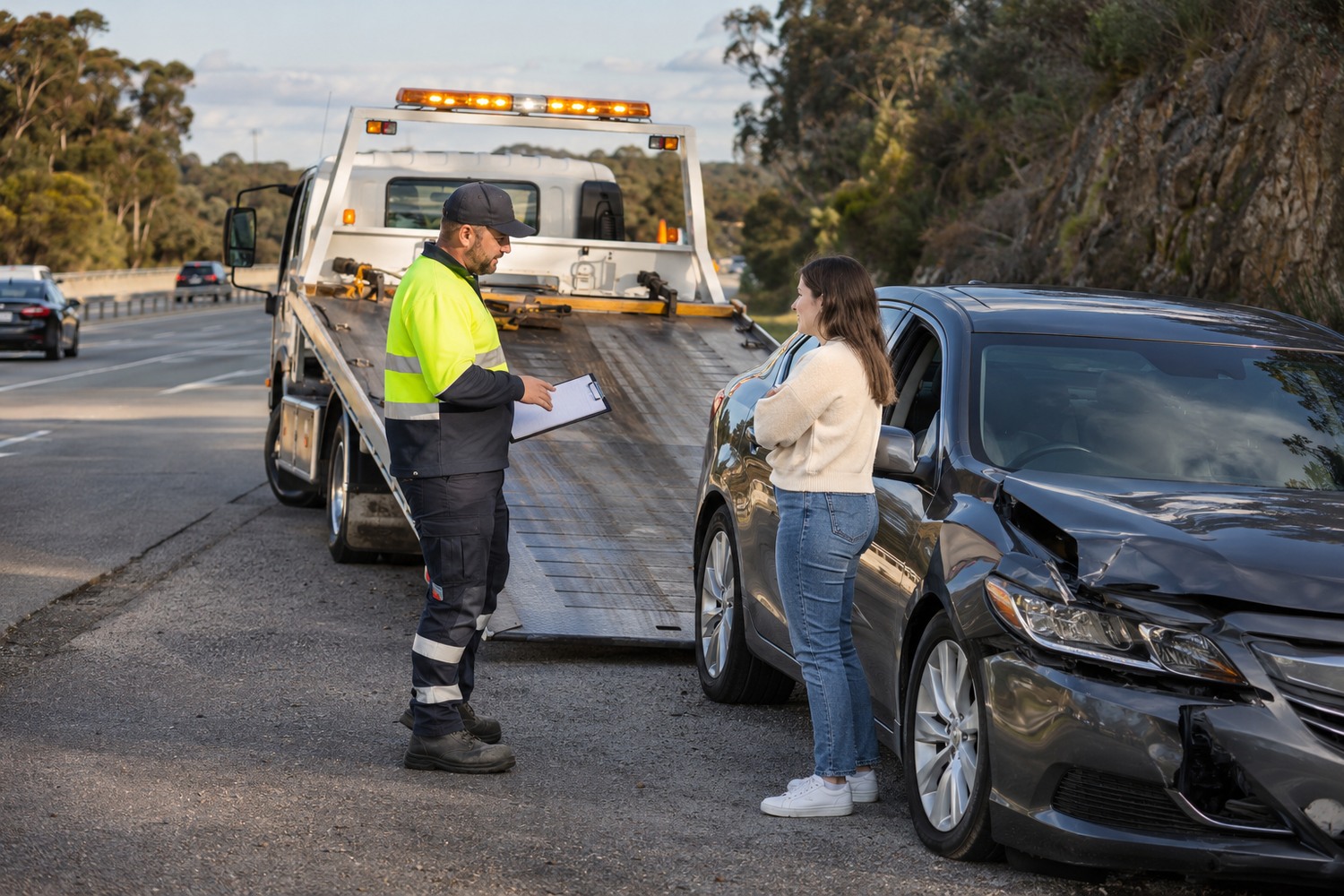
An allocation centre does, working from a roster. Nobody at the scene chooses, including you.
Melbourne and the Mornington Peninsula sit inside what the law calls a controlled area. That is a zone where accident towing jobs are handed out centrally, rather than going to whichever truck arrives first. A tow truck may only attend a crash inside it with an allocation number for the job.
Only licensed tow trucks may tow a crash-damaged car, and the licence is visible from where you stand. An accident tow truck carries a number plate starting with ‘TOW’, or ‘HTT’ if it is a heavy one. All of it runs under the Accident Towing Services Act 2007 and the regulations made under it in 2019.
The allocation number matters later rather than at the scene. Ask for it and write it down. Before a repairer can quote your car they must confirm it was towed and handled properly, and the allocation and depot numbers are part of that.
For the rest of the first hour, read what to do after a car accident in Melbourne. This article stays with the truck.
Can you choose where your car is towed?
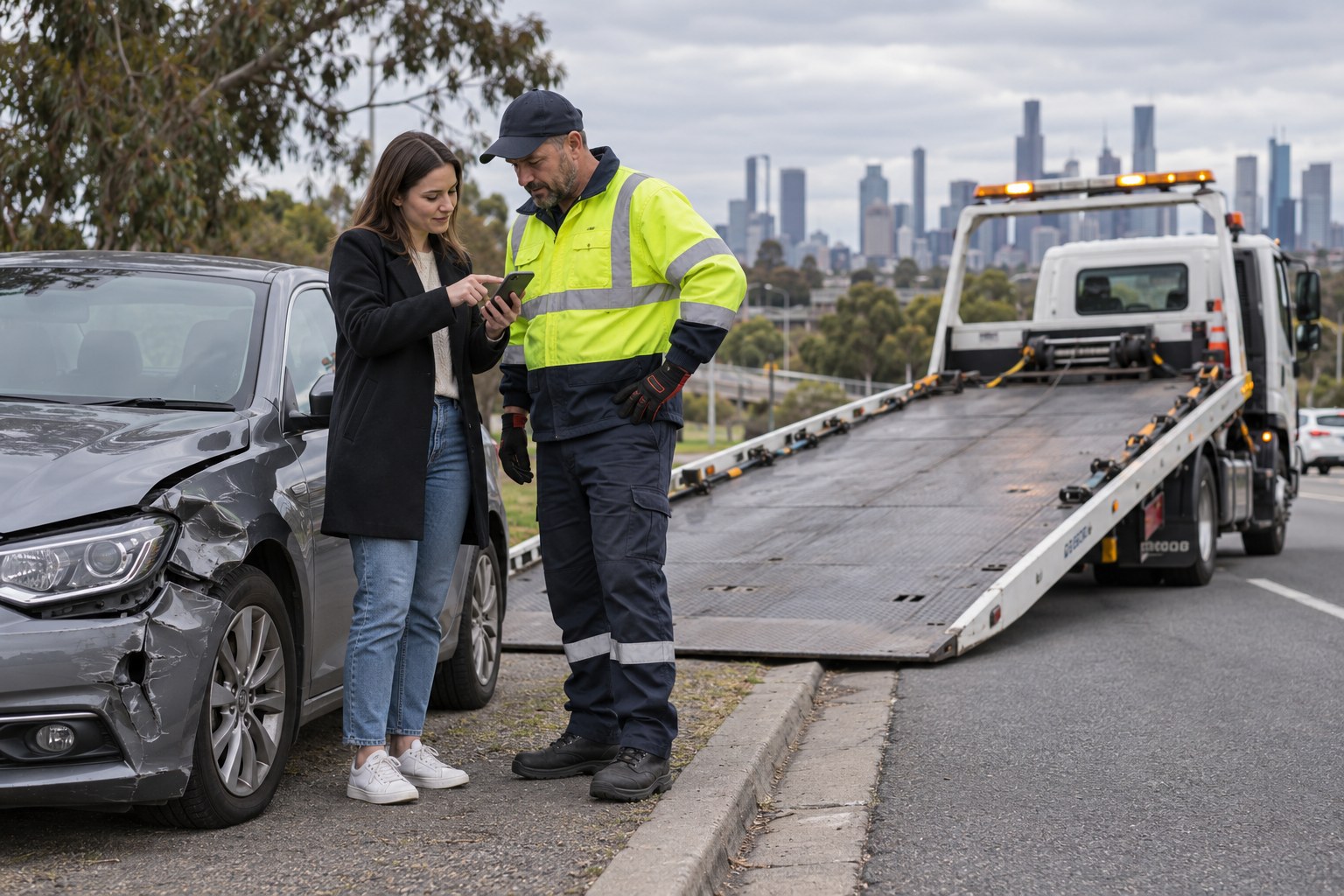
Yes. You name the destination and the driver has to take the car there. That holds as long as it is less than 125 km away and you pay at the time of the tow.
You can name a repairer instead of a depot. A workshop that handles not-at-fault repairs is nominated like any other address.
- Payment is the catch, not distance. 125 km covers greater Melbourne several times over, so paying on the day is the real limit. If you cannot, the driver may decline your address and take the car to the operator’s depot. Cash, credit card and debit card all have to be offered.
- You do not need to know whose fault it was. The tow usually happens long before that is settled. There is more in what not-at-fault drivers can claim in Victoria. Being not at fault changes neither the roster nor who pays the driver on the day.
- If you have not decided, the car goes to a depot. Each depot has its own boundary, and the truck takes the car to the one covering that part of Melbourne. It has to be kept secure throughout. Ask whether that means under cover or out in the yard, and what each costs. Once the charges are paid, the depot must release the car on weekdays between 8am and 5pm.
What do you sign at the scene?
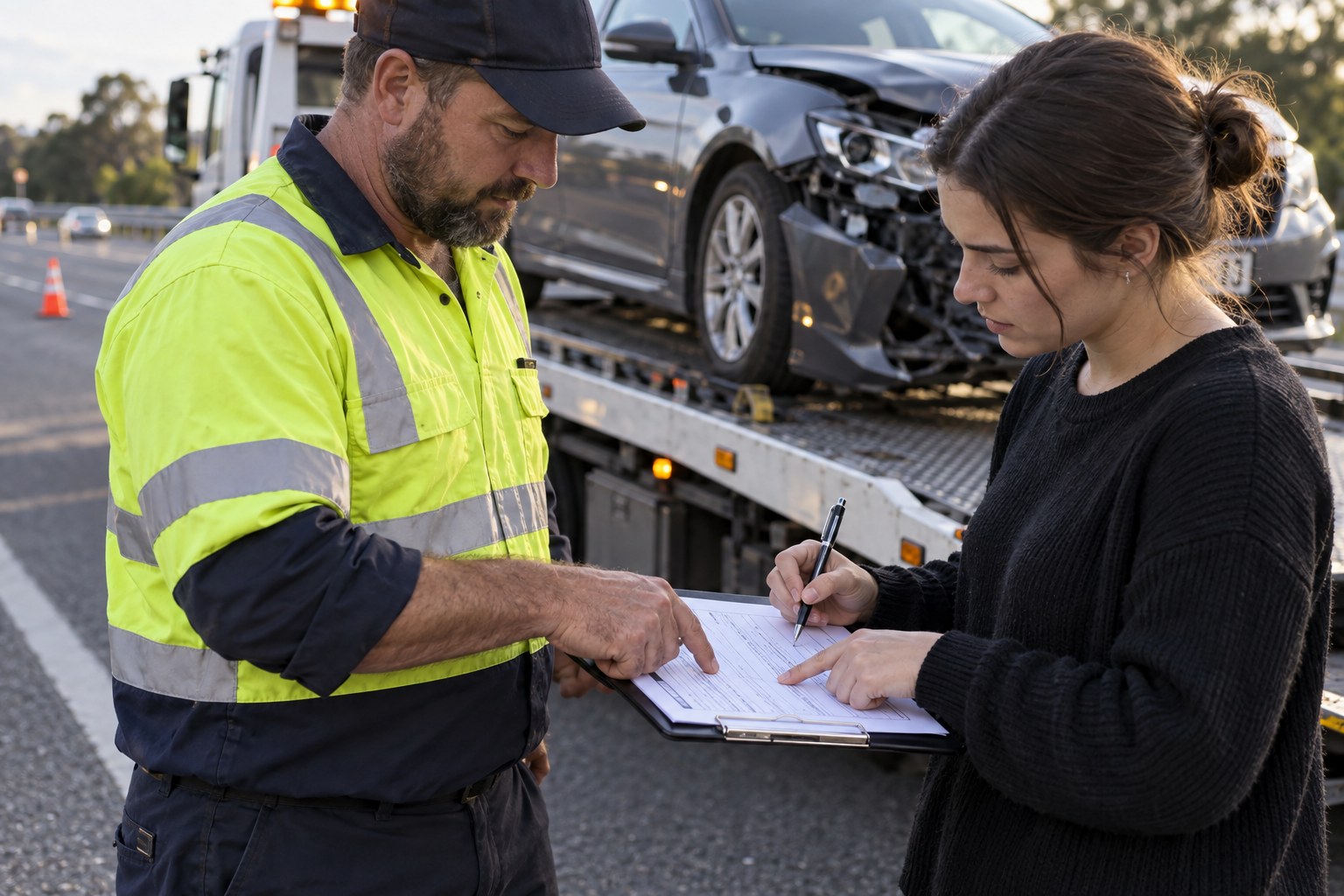
Two documents change hands.
An authority to tow is not an authority to repair. It moves your car. It does not pick your repairer, and signing it commits you to nothing about the repair work.
- The towing information leaflet. Before the car moves, the driver must hand you a leaflet setting out your rights when a vehicle is towed after a crash. They must also explain that you can send it to a destination of your choice.
- The authority to tow. Your car cannot be towed until this is signed. It sets out the towing and salvage work and what it costs, and records where the car is going. The driver must give a copy to whoever signs. If you are in no state to sign, a police or Department of Transport and Planning officer can sign for you. You still pay.
Touting for repair work at an accident scene is prohibited, so nobody there may ask you for the job. If the car has already gone to a yard and you think the choice was made for you, choosing your own panel beater in Victoria picks up from there.
Read the authority before you sign, and check the destination on it is the one you asked for.
What if the crash is outside the controlled area?
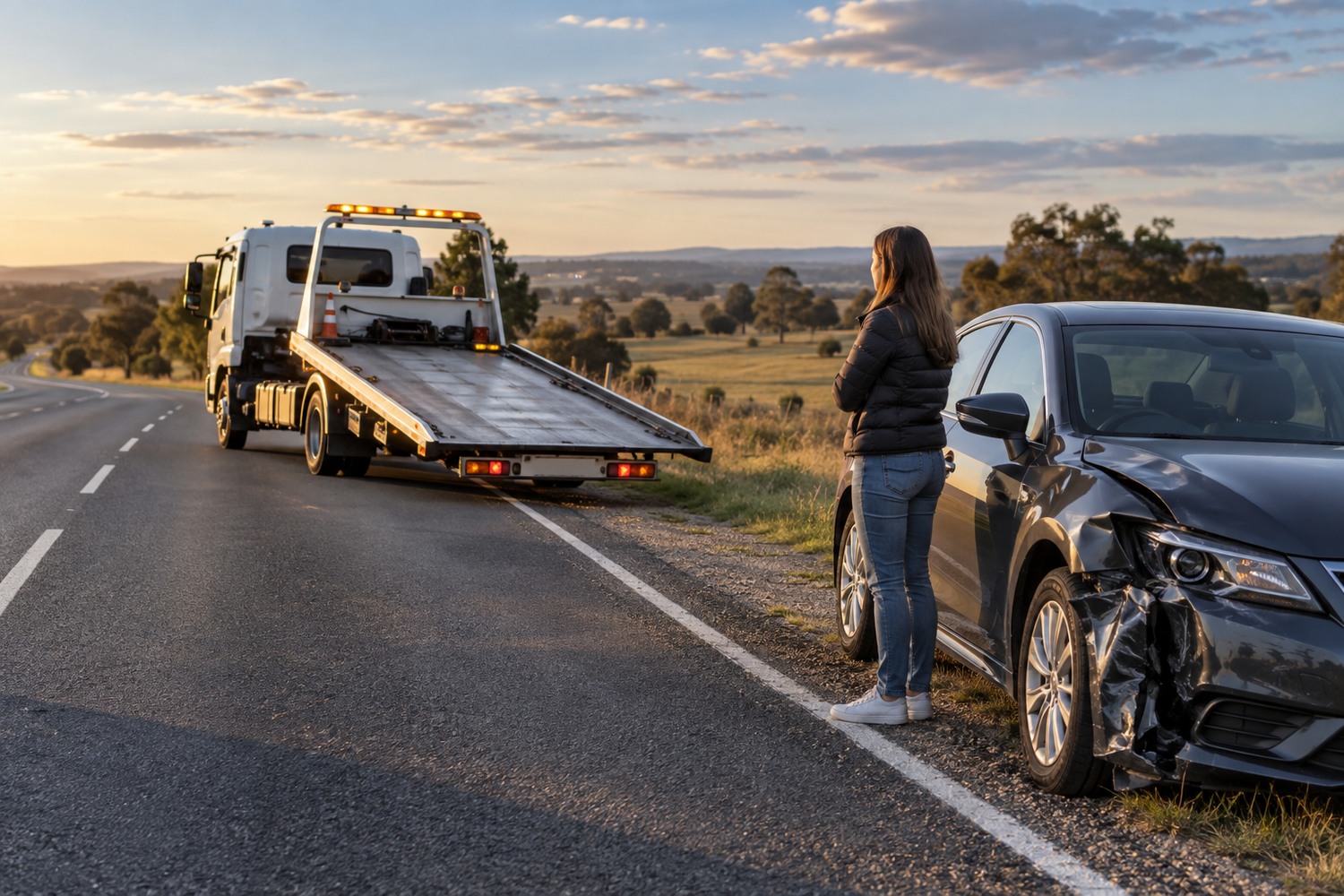
The rules are different, and simpler. Outside the Melbourne controlled area and the Geelong self-management area, tow trucks may attend without a formal allocation, so there is no roster and no allocation number. Police may direct a truck, or you or your insurer will call an operator.
Melbourne’s west sits well inside the controlled area, which surprises people who think of it as the edge of town. The depot boundary maps put Truganina, Derrimut, Laverton, Werribee, Point Cook and Melton all within it. A crash on the Princes Freeway or the West Gate approach is an allocated tow. The boundary follows the scheme rather than any suburb sign, so the allocation map settles it.
Who tows a truck after a crash?
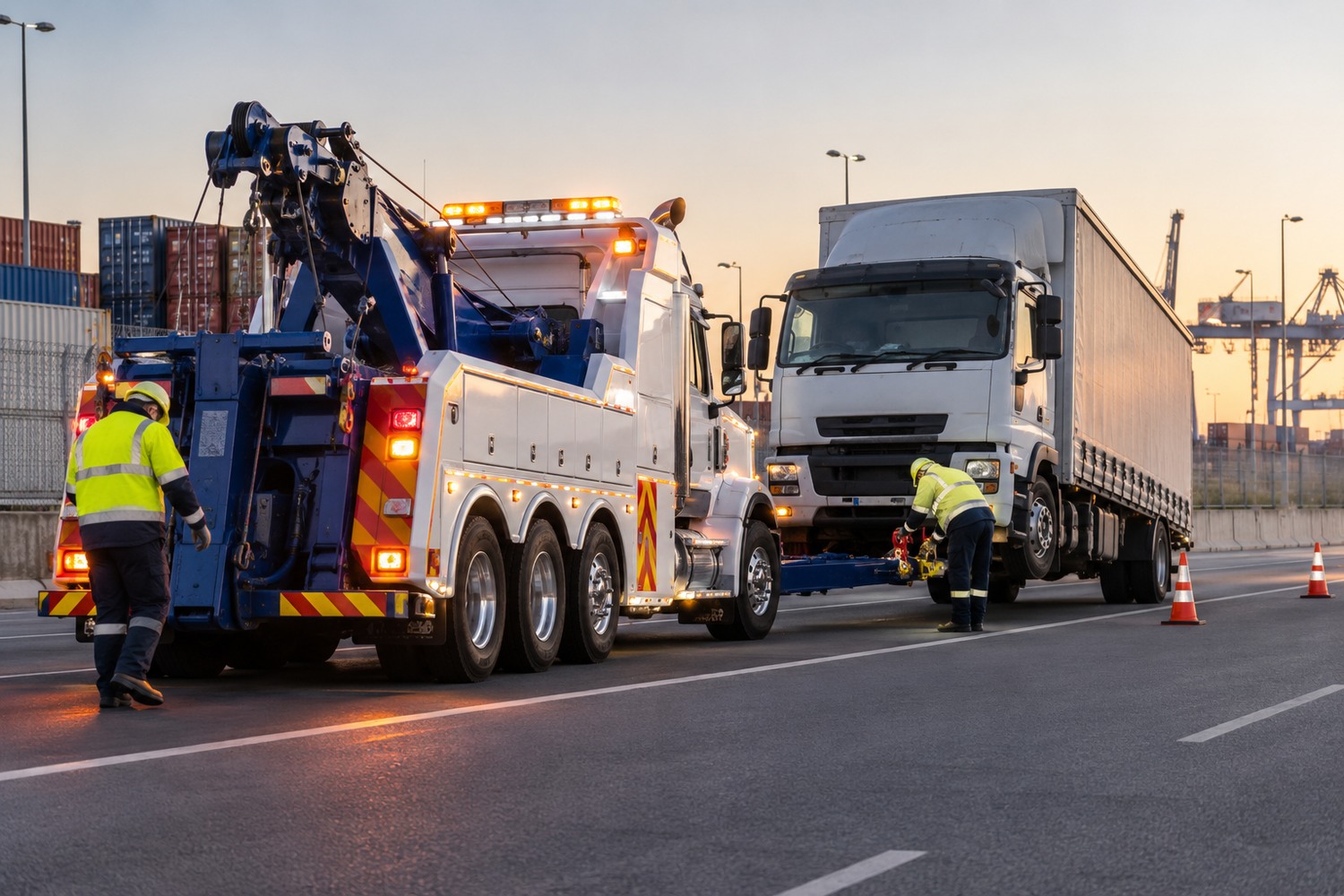
Not the allocation centre. It only assigns tow trucks for vehicles with a gross vehicle mass under 4 tonnes. At 4 tonnes and above the roster does not apply, and heavier vehicles go to specialist operators.
That threshold cuts through the middle of a normal fleet. A dual cab ute is under it. A rigid delivery truck is not. Gross vehicle mass on the compliance plate decides which side a vehicle sits on: not the badge, not the body type, not the licence class of whoever is driving.
Three things follow, all worth sorting before you need them.
- Nobody is coming automatically. There is no roster to fall back on. Someone has to call a heavy recovery operator, and at 2am on the Princes Freeway that someone is you or your insurer.
- The price is not set. The Act does not regulate accident towing charges at 4 tonnes and over. They must still be reasonable. The Act says what that weighs: the service, when it was provided, and what nearby operators charge.
- The destination matters more, not less. A rigid truck cannot go just anywhere. Fewer workshops can take one, so knowing which in advance saves you a second tow.
The freight roads around Truganina and Laverton carry plenty of vehicles on the wrong side of that threshold. Workshops set up for truck smash repairs are not on every corner. If a rigid in your fleet went down tonight, the useful question is whose number is already in the phone.
Who pays while the car is sitting there?
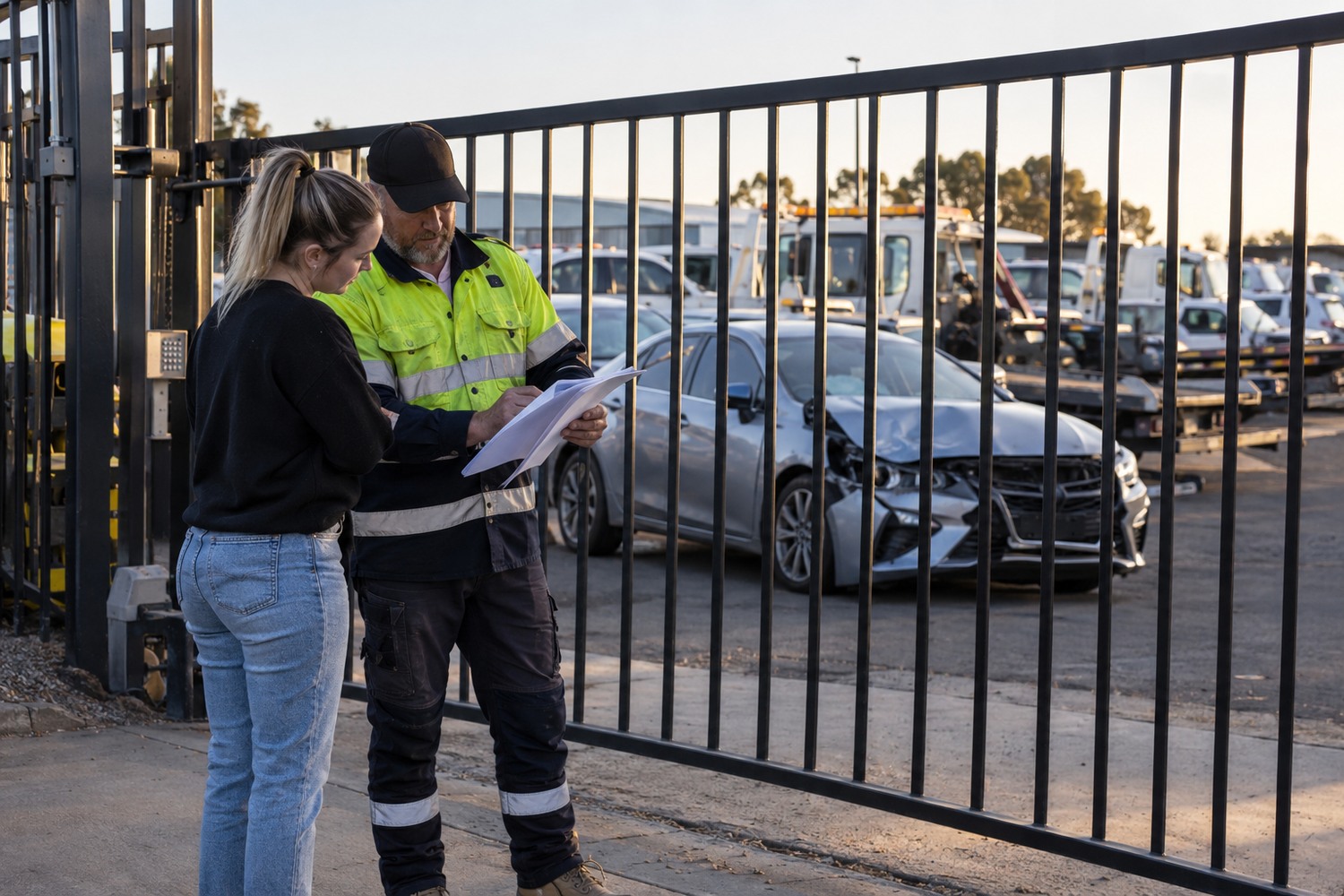
You do, and it adds up daily from the moment the car arrives. A tow is a one-off. Storage is a meter.
In metropolitan Melbourne the daily maximums are set: as at September 2026, $32.80 for a car under cover and $22.20 for a car in a locked yard, every day until it leaves.
The towing charges are set too. The base charge is $289.60 and covers the first 8 kilometres, then $4.60 for each kilometre after that. A tow between 5pm and 8am on a weekday, any time over the weekend, or on a public holiday adds an after-hours charge of $98.80. Those figures include GST and cover vehicles under 4 tonnes in metropolitan Melbourne. Each is the charge the law sets, and an operator may not charge a different amount.
Two things keep the bill down. Move quickly, because a car sitting in a yard until the insurer has assessed it costs money every one of those days. And tell your insurer where the car is, with the depot and allocation number, on the first call.
Decide the destination before the truck arrives
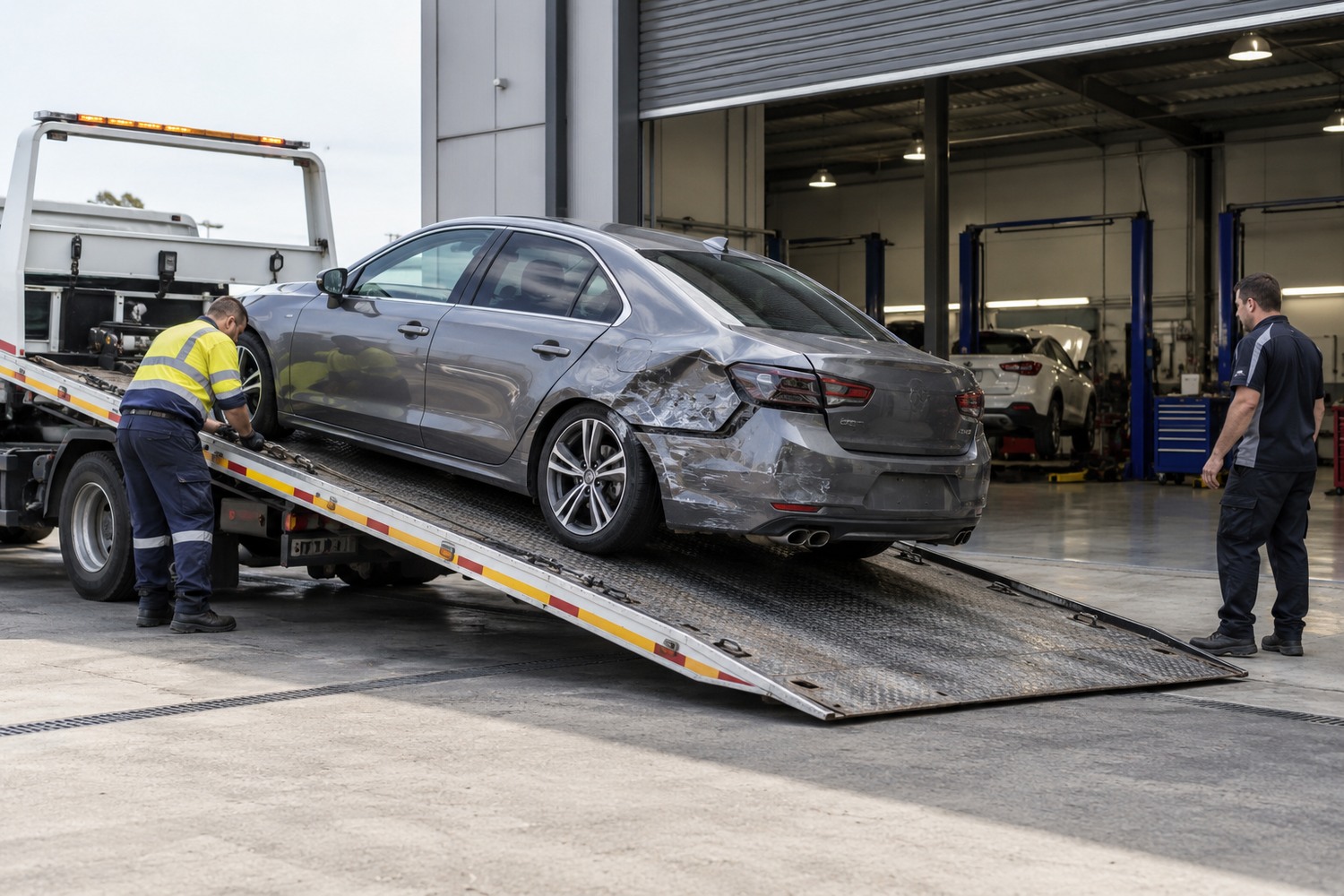
Back to the roadside. The allocation happened without you, and that part is not yours to change. What you can change is the answer to the question the driver is about to ask: where the car is going.
Have that ready and the car goes where you wanted. The paperwork records it, and your repairer can pick the job up without chasing a depot for a car nobody can find.
“I’d like the car taken to my repairer rather than the depot. Here is the address, and I can pay the tow now.”
Put a workshop’s number in your phone tonight and the address beside it. Ours is 03 8353 9329, and the rest is on the contact page.